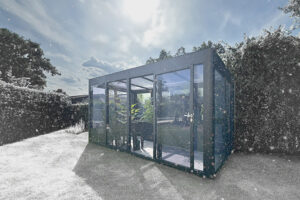
Fogged-up windows and water droplets on the walls are a common occurrence in many greenhouses, especially in the fall and winter. A certain amount of condensation is perfectly normal at first. However, it becomes a problem when too much moisture remains in the greenhouse over time and the plants, structure, or equipment are constantly wet.
With proper ventilation, adjusted watering, and a balanced indoor climate, excess moisture can be significantly reduced. In this article, we’ll explain why condensation forms and what measures can help in the long term.
Why does condensation form in a greenhouse?
Condensation occurs when warm, humid air comes into contact with a significantly cooler surface. As the temperature drops, the air can hold less moisture. The excess water vapor therefore condenses into small droplets on windows, window frames, and other cold components.
In a greenhouse, a particularly large amount of moisture is produced by:
- evaporation from the soil
- watered plants
- damp planters and saucers
- the natural transpiration of the plants
- rainwater and wet objects
- Significant temperature differences between day and night
On sunny fall or winter days, the greenhouse can get very hot during the day. After sunset, the temperature drops rapidly—ideal conditions for condensation.
Is condensation in a greenhouse harmful?
A few fogged-up panes in the morning are not yet a cause for concern. The key factor is whether the moisture can dry up again as the day progresses.
If the greenhouse remains very damp for an extended period, unfavorable conditions can develop. These include, for example:
- Mold growth
- Fungal diseases in plants
- Rotting of leaves and roots
- Algae growth
- Permanently wet surfaces
- Pest infestations in weakened plants
Therefore, especially when overwintering sensitive plants, care should be taken to ensure that moisture does not remain trapped in the greenhouse for extended periods.
How to Properly Ventilate a Greenhouse and Reduce Humidity
The most important measure against persistent condensation is regular air circulation.
Therefore, even in the fall and winter, a greenhouse should not remain completely closed. However, timing is crucial.
It's best to air out the room during the day
The best time to ventilate is in the late morning or early afternoon, when outdoor temperatures are slightly higher.
Windows or doors can be opened briefly to allow moist air to escape and drier outside air to flow in.
On very cold days, it’s better to ventilate briefly and thoroughly rather than leaving windows ajar for many hours. This prevents the greenhouse from cooling down as much.
Automatic window openers can help
In greenhouses with roof or side windows, automatic window openers can help with ventilation.
They respond to temperature changes and open the windows automatically as the temperature rises. This is especially useful during transitional seasons, when the greenhouse heats up quickly during the day.
Good air circulation helps reduce large fluctuations in temperature and humidity inside the greenhouse.
How to Water Plants in a Greenhouse Properly
Watering also has a significant impact on humidity.
In the fall and winter, many plants need significantly less water than during the main growing season. Watering too frequently increases evaporation and, consequently, the humidity in the greenhouse.
It is therefore recommended that you:
- water only when actually needed
- Avoid waterlogging
- Check the saucers regularly
- Water in the morning whenever possible
- Do not spread water unnecessarily on the floor
If you water in the morning, some of the moisture can evaporate during the day.
Ensure good air circulation among the plants
Plants that are too close together hinder air circulation.
Therefore, there should be sufficient space between pots, planters, and leaves. This improves air circulation and helps damp leaves dry out.
Dead plant parts and fallen leaves should be removed regularly. They retain moisture and can also provide a breeding ground for fungi.
Condensation and Heating in the Greenhouse
Mild heating can stabilize the climate inside a greenhouse, but it does not automatically prevent condensation.
Warm air can hold more moisture. When this moist air comes into contact with cold windows, condensation can still form.
Anyone using a frost monitor or greenhouse heater should therefore still ventilate regularly.
The goal should not be to keep the greenhouse as warm as possible. It is more important to maintain as stable a combination as possible of temperature, humidity, and air circulation.
Consider the floor and furnishings as sources of moisture
It’s not just plants that release moisture into the air.
Open containers of water, wet gardening tools, damp soil, or water on paved surfaces also increase humidity.
That’s why it’s worth taking a quick look around regularly:
- Is there water anywhere?
- Are the saucers full?
- Are there damp leaves in the greenhouse?
- Can the ground dry out sufficiently?
- Are there any areas that remain constantly wet?
Even small changes can significantly improve the indoor climate.
Condensation on Glass, Acrylic Glass, and Multiwall Sheets
In general, condensation can occur on any type of greenhouse glazing. How noticeable it is depends, among other things, on the material, outside temperature, humidity, and thermal insulation.
Even high-quality glazing cannot completely prevent condensation caused by physical factors.
Therefore, regardless of the material used, the most important measure remains a well-balanced combination of ventilation, temperature, and humidity management.
Check Your Greenhouse Regularly in Winter
During the cold season, it’s a good idea to check your greenhouse regularly.
Pay particular attention to:
- persistently fogged-up panes
- water droplets on plants
- damp or moldy soil
- dead plant parts
- standing water
- Unusually high humidity
- Poorly ventilated areas
If you spot problems early, you can usually take simple steps to address them.
The right climate protects plants and the greenhouse
Condensation in a greenhouse cannot be completely prevented—nor is that necessary. The key is to ensure that excess moisture can escape regularly and that plants do not remain wet for extended periods.
Regular ventilation, watering as needed, sufficient spacing between plants, and good air circulation ensure a more balanced greenhouse climate even in the fall and winter.
This creates better conditions for healthy plants and successful overwintering.